

Responsive Education and Training: From Policy to Practice
He mātauranga urupare mō te ako me te whakangungu: mai i te aronga kaupapa here ki te whakatinanatanga whai hua.
The 2026 ITENZ Conference focuses on how vocational and tertiary education providers translate policy intent into effective practice.




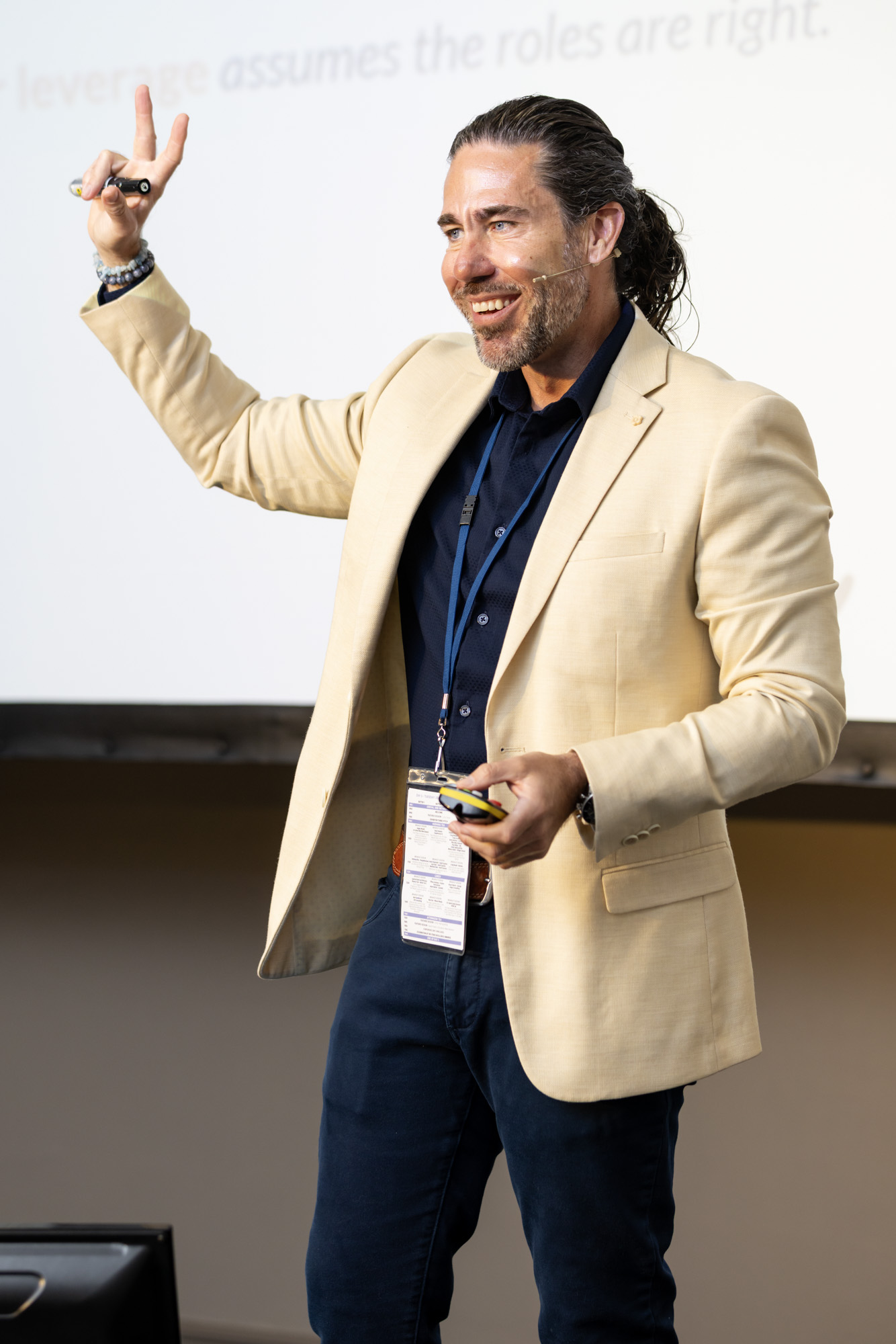

ITENZ Conference 2026
Tuesday 15th - Wednesday 16th September 2026
Novotel Rotorua Lakeside
1115/1093 Tutanekai Street, Rotorua 3010
2026 Conference dates and venue confirmed
We are pleased to announce that the 2026 ITENZ Conference will be taking place at the Novotel Rotorua Lakeside on Tuesday 15th and Wednesday 16th of September 2026.
Rotorua is renowned for its rich Māori culture, world-class spas and wellness experiences, otherworldly geothermal landscapes, and incredible backyard of lush forests and sparkling lakes.
Rotorua is connected by air to all major cities and is no more than three hours’ drive to more than half of New Zealand’s population, including Auckland.
2026 Presentations
Presentation slide PDF's
You now have the chance to revisit several of the presentations at the 2025 conference. Check out the link below to have access to these files.
Speakers
Keynote Speakers

Hon Penny Simmonds CNZM
Minister for Tertiary Education

Julia Grace
Keynote Speaker | Mental Heath Educator
Featured Speakers
Shanan Halbert MP and Francisco Hernandez MP are presenting as a part of the Political Panel on Day 2 of the Conference.

Emily Fabling
Deputy Chief Executive | NZQA

David Downs
Chief Executive | ENZ

Francisco Hernandez MP
Green Party List MP | Spokesperson for Tertiary Education

Shanan Halbert MP
Spokesperson for Tertiary Education and Whānau Ora | Labour

Tim Fowler
Chief Executive | TEC
Speakers

Wayne Dyer
Chief Executive | ITENZ

Jenny Jenkins
General Manager | Le Cordon Bleu New Zealand

Craig Musson
Head of Governance | New Zealand Airline Academy

Meenu K. Gulati
Corporate Portfolio Manager | eduget global

Sue Davidson
Academic Quality Director | Laidlaw College

Craig Boxall
Co-Founder and CPO | Nexties

Andy Donohue
General Manager – Education and Diversity Group | BCITO

Gabriel Pankl
Chief Academic Officer | Native Tech

Anthony Rice
Co-Founder | PeoplePartners

Farrah King
Market Strategist | Instructure

Nyk Huntington
Principal Policy Analyst | MOE

Katrina Sutich
General Manager Tertiary Policy, Te Pou Kaupaphere | MOE

Nikolasa Biasiny-Tule
CEO/Founder/Biosphere Architect | Digital Natives

Tyler Robbins
Director and Education Consultant | QED Associates

Tiffany Andrews
Academic Manager | Fruition Horticulture

Dr Syeda Sadia Farzana
Senior Lecturer and Program Leader | ATMC NZ

Stuart Martin
Founder | George Angus Consulting

Pratishtha Purohit
Founder | EduventureNZ

Matthew Dale
Co-Founder & Chief Commercial Officer | Audit Express

Lara Dyer
Quality & Audit | Audit Express

Kevin Ekendahl
CEO | Audit Express

Jane Elderkin
Founder and Director | Affinity Plus College

Angelo Minelli
Business Lecturer | Le Cordon Bleu NZ

Nadia Tuitahi
Chief Operating Officer |ITENZ
Sharon-May McCrostie
Director Sector Engagement | Education New Zealand

Alan Kan
Co-founder & Innovation Director | Mission Ready

Paul Millar
Engagement Partner - International Education | Immigration New Zealand

Dave Howden
CEO & Co-Founder | SupaHuman

Dr Adam Barker
Founder | Scarlatti
SCHEDULE
Arrival and Networking
Conference Welcome
Featured Session - Julia Grace
Julia Grace
Exhibitor Turbo Pitch
Morning Tea
Breakout session - From Plate to Practice: Using Industry–Academia Partnerships to Build Sustainability Skills and Reduce Food Waste in Hospitality
Food waste remains one of the hospitality industry's most significant sustainability and productivity challenges. At the same time, tertiary educators are increasingly expected to provide graduates with practical sustainability competencies that extend beyond classroom learning. This presentation shares the findings of a Participatory Action Research project involving hospitality students and sixteen independent restaurants in Wellington, New Zealand. Through a structured industry–academia partnership, students worked alongside restaurant operators to identify food-waste challenges, collect operational data, co-design practical solutions, and evaluate outcomes. The project demonstrates how experiential learning can simultaneously enhance student learning, support industry partners, and contribute to sustainability goals. Findings show that students acted as catalysts for reflection and innovation, helping operators identify waste-generating practices and implement simple, low-cost interventions such as waste-tracking templates, inventory management tools, portion-control guides, and surplus food utilisation strategies. The session will discuss how hospitality educators can integrate authentic industry projects into curriculum design, strengthen graduate employability, and create meaningful partnerships with local businesses.
Angelo Minelli
Breakout session - The AI Blueprint for VET New Zealand: Why the Sector's Crisis Is an Operating Model Problem Breakout Session
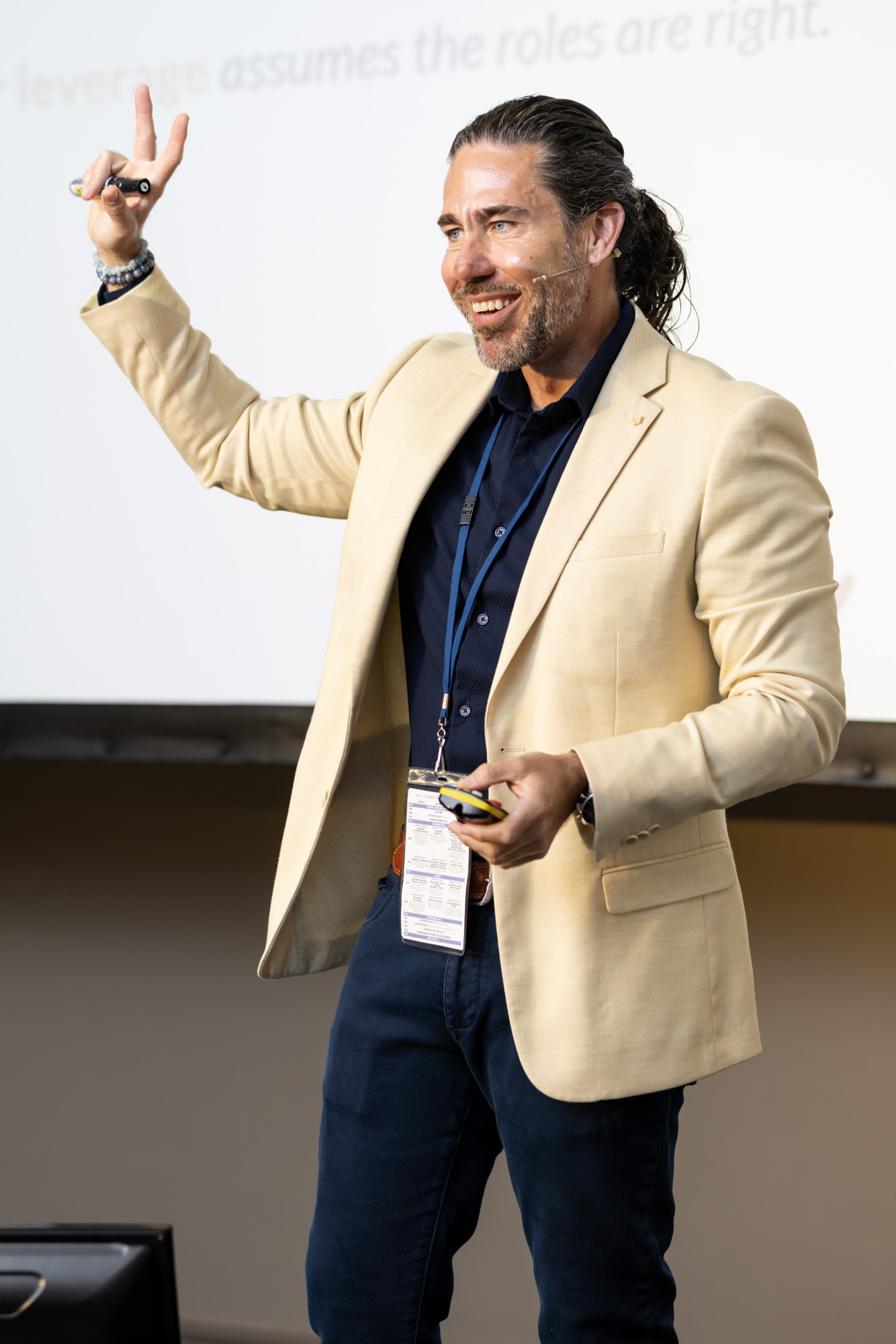
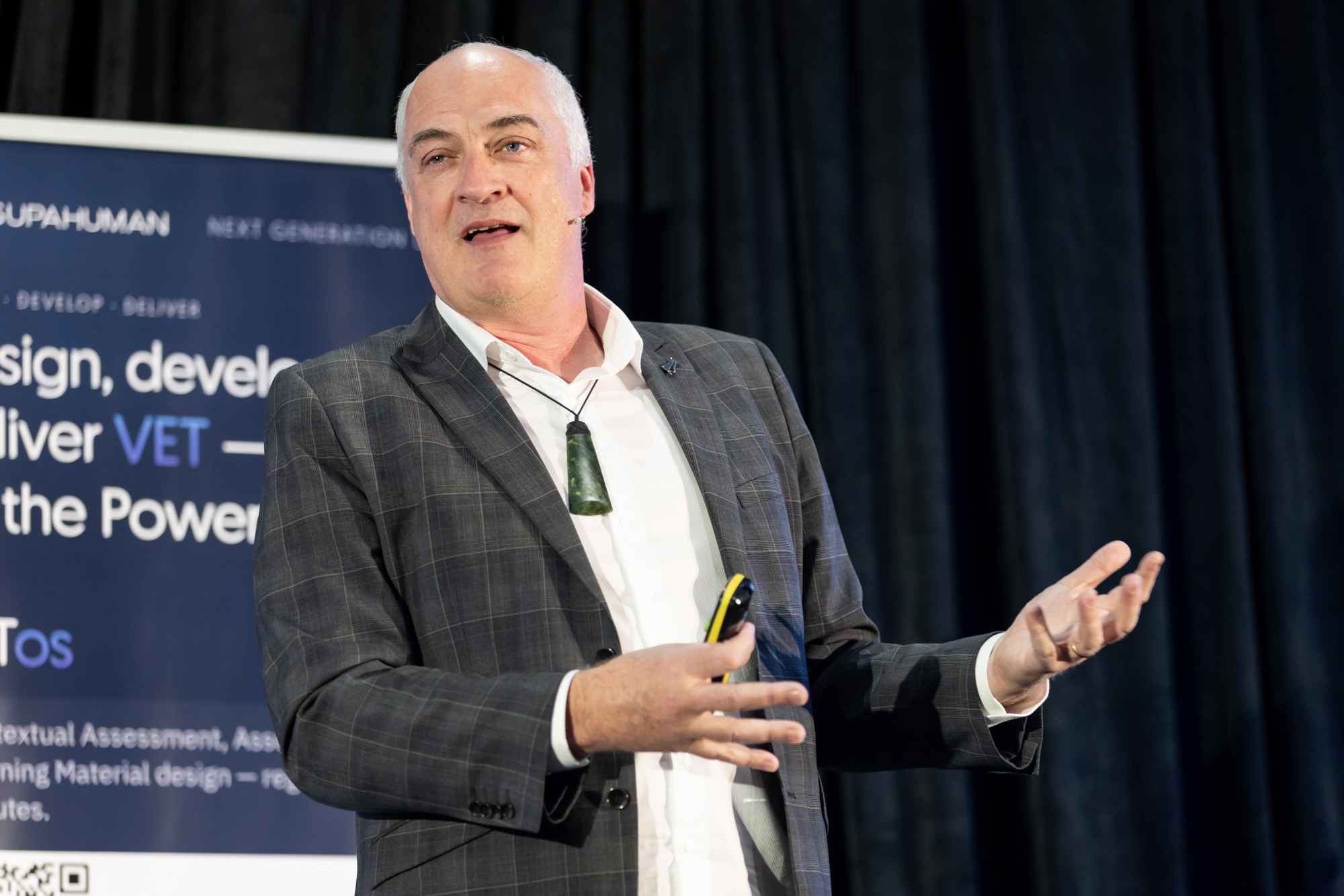
In this session, Dave Howden, CEO & Co-founder at SupaHuman AI, presents the findings of An AI Blueprint for VET in New Zealand – a clear-eyed argument for why the sector's pressures won't be solved by compliance frameworks or workforce strategies alone. It's an operating model problem. And for the first time, there is a lever big enough to fix it. Drawing on insights from providers across Aotearoa, Dave unpacks where the real burden sits – assessment design, moderation, compliance documentation, programme development – and shows how PTEs are already using AI to do this work in hours rather than weeks, without compromising quality or NZQA requirements.
Dave Howden
Breakout session - The International Education Journey: Opportunities, Expectations and Practical Advice
As New Zealand works towards its goal of doubling the value of international education by 2034, more PTEs are considering entering or expanding into the international market. Whether you are exploring international education for the first time or looking to strengthen an existing international operation, this panel will provide practical insights to support informed decision-making. This panel brings together providers and key sector organisations to discuss what it takes to enter and to succeed. Through a facilitated discussion, the panel will explore the international education landscape, market opportunities, regulatory requirements, immigration settings, organisational capability, working with education agents, indicative timelines, and the opportunities and challenges facing the sector. The session will conclude with an opportunity for audience questions.
Emily Fabling
Sharon-May McCrostie
Meenu K. Gulati
Craig Musson
Paul Millar
Jenny Jenkins
Breakout Session - Workforce Design for the AI Era: Why You’re Optimising the Wrong Thing
In a regulated education environment, complexity often grows faster than revenue. As PTEs scale, roles become broader, leaders remain trapped in execution, and margins tighten even when enrolments continue to grow. Most organisations respond by hiring more people, implementing new systems, or embracing AI. But what if those solutions are optimising the wrong thing? In this practical and thought-provoking session, Anthony Rice challenges one of the biggest assumptions in organisational design and introduces a different way of thinking about workforce capacity, scalability, and the future of work. Using real education-sector examples, attendees will leave with practical ideas to rethink how work is designed, where AI fits, and how to build organisations that are more scalable, resilient, and better prepared for the AI era.
Anthony Rice
Breakout session - Effectively managing AI risks in your PTE
AI influences how learners’ study, how staff work, and how PTEs design, deliver, assess, and support learning. AI creates opportunities for efficiency, innovation, and learner support; however, it also introduces risks around privacy, data security, assessment integrity, learner authenticity, staff capability, academic judgement and recordkeeping. This session will explore how PTEs can use ISO 31000 risk management principles to manage AI risks and develop practical AI policies and controls. Rather than focusing on whether AI should be accepted or banned, the session will support providers to take a structured, risk-based approach to understanding AI use, setting clear expectations, and implementing safeguards across teaching, learning, assessment, administration, and quality assurance. Using ISO 31000 as a practical framework, the session will step through the process of understanding the AI context, identifying risks, assessing and prioritising risks, deciding on treatment actions, monitoring effectiveness, and communicating expectations clearly to staff and learners. The session will discuss what a practical AI policy may need to cover e.g. acceptable and unacceptable use, learner and staff responsibilities, AI use in assessment, disclosure requirements, privacy and confidential information, human oversight, academic integrity, use of AI detection tools, recordkeeping, staff training, and policy review. Practical examples will show how AI risks can arise in different areas
Kevin Ekendahl
Lara Dyer
Matthew Dale
Breakout session - What learners want before they tell you: early signals, better decisions
Most providers are making strategic decisions based on information that is already out of date. Enrolment data from last year. Completion rates from the year before. By the time a trend is visible, the planning window has often closed. This session draws on Nexties' ongoing work with schools and career advisors across Aotearoa, including a current pilot programme with secondary schools focused on how rangatahi explore learning and career options, to share what learner intent looks like before it becomes an enquiry. What are learners exploring six to twelve months before they contact a provider? How does that differ across sectors, regions, and learner types? And what does it mean for how PTEs plan, position, and make decisions about where to focus? The session will share practical observations from this research and school engagement work, and invite participants to reflect on how forward-looking learner insight could change specific decisions in their own organisations, from programme planning and employer partnerships through to how they evidence labour market alignment in TEC investment plans. The goal is not to add to the noise. It is to give PTE leaders a different kind of signal, and a practical way to think about using it.
Craig Boxall
Lunch
Breakout session - From Engagement to Progression: How the Native Tech Model Supports Learner Success
This presentation introduces the Native Tech model, a flexible and learner-centred approach to tertiary education designed for rangatahi who may not have experienced success in traditional learning environments. The session will outline Native Tech’s pedagogical framework and explain how it shapes curriculum design, delivery, learner support, and progression. It will explore how the model combines project-based learning, digital and creative skills, strong relational practice, wellbeing support, and flexible programme structures to meet learners where they are. The presentation will also discuss why this approach works for our students, particularly priority learners with diverse levels of readiness, confidence, and previous educational experience. Rather than treating flexibility as an add-on, the Native Tech model places responsiveness at the centre of programme design and organisational practice. Through this model, Native Tech aims to improve engagement, retention, learner success, and meaningful progression into further study, employment, and positive futures.
Nikolasa Biasiny-Tule
Gabriel Pankl
Breakout session - From Policy to Practice: AI-Enabled Oral Assessment for Learner Success
Vocational and tertiary providers are under pressure to respond to changing learner needs, strengthen assessment quality, improve productivity, and turn policy intent into practice. This presentation shares how Fruition Horticulture and Scarlatti redesigned assessment using Vocina, an AI-enabled oral assessment platform. The project addressed two challenges. For many vocational learners, including Māori, Pasifika, ESOL learners and those with literacy barriers, written assessment can obscure what they know and can do. For higher-level learners, including Fruition’s Level 6 diploma students, AI-generated work is raising concerns about authenticity and academic integrity. With Vocina, learners complete structured oral assessments through a guided AI agent. Tutors set the questions, prompts and rubric alignment, while the agent asks follow-up questions to clarify or deepen responses. Recordings, transcripts and summaries support tutor judgement and moderation, but the final decision remains with the educator. The approach has reduced barriers for priority learners and enabled professional learners to explain, defend and apply their thinking in real time. This session will show how the model moved from pilot to embedded practice across horticulture, leadership and primary industry programmes. Participants will gain practical insights into inclusive oral assessment, managing AI risk, and using technology to strengthen professional judgement.
Tiffany Andrews
Breakout session - Neuro-inclusion: From research to practice
Most education organisations in New Zealand will tell you they support neurodivergent learners. Far fewer can show you how. This presentation tells the story of what happens when research becomes practice. Between 2023 and 2025, I undertook a substantial body of research into appreciating and supporting neurodiversity, examining how education and employment settings identify, accommodate, and include neurodivergent people across New Zealand and internationally. The findings were, in many respects, uncomfortable. Whilst good intentions were common, consistent, evidenced, structural support was not. The research produced calls to action across policy, assessment design, workforce capability, and the lived experience of learners, with implications spanning pre-vocational and vocational education, industry, and government. The Neurodiversity-Supportive Standard (NSS) is an outcome that GAC developed in response to that research. Launched in Paris in June 2026, it is structured around seven principles and four recognition levels, and is flexible enough to be applicable worldwide. The NSS gives organisations a clear, independently assessable framework for building genuine neuro-inclusive practice rather than simply claiming it. It is not a checklist. It is a development pathway. This session traces the full arc from research question to working standard, and asks what it takes for New Zealand's tertiary and training sector to move from awareness to accountability.
Stuart Martin
Breakout session - Positioning Your Organisation for Success Under iQAF
As providers prepare for NZQA's Integrated Quality Assurance Framework (iQAF), an important consideration is not just how to respond to the framework itself for compliance, but how to position their organisation for success within it. This presentation will explore practical approaches to preparing for and operating under iQAF. Drawing on observations from across the tertiary sector, it will examine how self-review, moderation, programme review, learner feedback, graduate outcomes, organisational planning, and the Tertiary Evaluation Indicators (TEIs) can work together to provide meaningful evidence of educational performance and continuous improvement. The session will also consider what can be learned from NZQA's published findings under the previous quality assurance framework. As at June 2026, more than 96% of providers were Category 1 or Category 2 under EER, with almost two-thirds achieving Category 1 status. However, monitoring findings between 2020 and 2024 show that 79% of providers partially met or did not meet monitoring criteria for internal moderation systems. Participants will explore what these findings may indicate about the organisational capabilities and practices likely to support success under iQAF. Particular attention will be given to how PTEs can strengthen and align existing systems, evidence, and evaluative processes, rather than creating parallel compliance frameworks.
Tyler Robbins
Breakout session - Reimagining Education in the Age of AI: Moving from Awareness to Capability
Generative AI is not just another technology trend. It is fundamentally reshaping how work is performed, decisions are made, and value is created across every industry. Education is already responding, with institutions building awareness through policies, training, and experimentation. But awareness is no longer the challenge. The real challenge is capability. This keynote explores what it means to move beyond awareness, and why incremental responses are no longer sufficient. It reframes AI not as a risk to manage, but as a defining capability that must be intentionally designed into curriculum, assessment, and learning workflows. Drawing on real-world practice in applied technology education, the session will introduce a clear shift – from awareness, to capability, to AI-enabled outcomes – where students do not simply use AI, but produce better work because of it. It will outline practical principles for redesigning education, including starting from the future role of the graduate, embedding human–AI collaboration into learning, and leveraging AI to enable continuous feedback and more effective learning processes. This is not a conversation about tools or policy. It is a call to rethink how education is designed, so that graduates are prepared not just to participate in an AI-enabled world, but to perform and create within it.
Alan Kan
Breakout session - The Responsive Practitioner: Why One Research Question Could Transform PTE Teaching — and What Gets in the Way
Think about the last time you changed something in your teaching because of what you observed — not because policy told you to, but because you noticed something was not working and you decided to find out why. That instinct — to look, to question, and to act on what you find — is the most underused resource in the PTE sector. Every teacher has it. Very few are supported to develop it systematically. And yet it is exactly what the Tertiary Education Strategy, NZQA quality frameworks, and every equity obligation we carry are implicitly asking for: educators who are not just delivering content, but genuinely responding to the learners in front of them. This session makes a simple but important argument: responsiveness is not a policy compliance activity. It is a practitioner habit. And we cannot build responsive organisations out of educators who have never been invited to ask a systematic question about their own teaching. Drawing on her experience as a Senior Lecturer, Programme Leader, and Doctor of Professional Practice candidate at Otago Polytechnic, Dr. Sadia Farzana shares what happened when she started asking that question seriously — how it changed her assessment design, her relationship with her learners, and her understanding of what quality teaching actually requires. More importantly, she will make a call as it is about having a habit. And with this strategy every PTE educator will be able to improve the delivery model, curriculum and to meet the learners` need.
Dr Syeda Sadia Farzana
Afternoon Tea
Featured session - Emily Fabling, NZQA
Emily Fabling
Featured session - David Downs Education New Zealand
David Downs
Conference Day concludes
Celebration of the ITENZ Excellence Awards
Arrival and Networking
Reflections of Day 1
ITENZ Association and Sector Update
Craig Musson
Wayne Dyer
Nadia Tuitahi
Featured Presentation - Hon Penny Simmonds MP
Hon Penny Simmonds CNZM
Morning Tea
Breakout session (60min) - Developing an effective risk management framework to build responsive education systems
This practical workshop will support PTEs and other tertiary education providers to build or strengthen an effective risk management system using ISO 31000 principles. As providers respond to policy reform, changing learner needs, workforce demands, regional delivery pressures, AI, international education growth, and quality assurance expectations, risk management provides a practical structure for making better decisions and turning policy intent into operational practice. The Tertiary Education Strategy 2025–2030 and the Private Training Establishment Rules 2026 will be used as sector context, showing why effective risk management matters for learner achievement, access and participation, workforce relevance, collaboration, safe delivery, student support, staffing, assessment, moderation, records, and quality management. The workshop will focus on practical application. Participants will be introduced to a simple risk management system structure, including risk categories, a risk register, risk ratings, controls, treatment actions, monitoring indicators, reporting, and review cycles. Working with realistic PTE scenarios such as regional delivery, assessment risk, learner support, staffing, AI, international education, or programme change, participants will identify risks, assess which risks matter most, develop practical controls, and consider what evidence would show whether those controls are working.
Kevin Ekendahl
Lara Dyer
Breakout session (60min) - You Cannot AI Proof Assessments: So What Should You Moderate Instead?
This session draws on my recent professional learning and my own applied practice in designing authentic assessments using generative AI, grounded in the NZQA context. It explores how AI tools can support assessment design, particularly in developing tasks, marking schemes, and rubrics. While AI has significantly improved efficiency, reducing rubric development from hours to minutes, it has also introduced new complexities. Designing assessments that are both fit-for-purpose and robust enough to meet NZQA external moderation expectations remains challenging. The concept of “AI proof” assessment is increasingly unrealistic given the rapid evolution of these tools. A key insight is that AI should be positioned as a support tool, not a substitute for academic judgement or quality assurance. Strong internal processes, particularly pre-and post-assessment moderation, are more critical than ever. This session includes a practical workshop where participants apply a pre-assessment moderation process to a sample assessment. Using a structured template, they will evaluate alignment, evidence sufficiency, and assessor consistency, while identifying tasks that can be easily completed using AI. The session introduces an added moderation lens of AI resiliency, supporting educators to design assessments that require authentic evidence of critical thinking and judgement, even where AI assistance is possible.
Jane Elderkin
Breakout session (60min) - Making the Invisible Visible: Practical Strategies to Lift Engagement and Reduce Attrition
Across the sector , both for vocational and international, the toughest engagement challenge is often the one we can't see. International students and Rangatahi disengage online, on campus and in class for reasons that look like low motivation but are usually something else: the invisible work of transition, belonging, identity shift and confidence loss. When we can't name what's driving disengagement, attrition becomes guesswork. This interactive session makes that invisible layer visible and turns it into practical, sustainable strategies providers can use across cohorts. Drawing on the EduventureNZ model, it integrates Te Whare Tapa Whā with Cultural Intelligence and accessible transition and career theory to explain why capable learners go quiet, why belonging takes deliberate work, and why "starting again" can stall engagement. It then translates this into language and tools staff can use immediately, so engagement, retention and completion become repeatable outcomes rather than lucky ones. Participants leave with a clear framework for reading disengagement signals, a simple method for responding to them, and at least one tool to adapt to their own setting, online or in person. Grounded in Aotearoa and informed by a FernMark-licensed practice model, the approach is locally rooted yet internationally transferable. It connects directly to growth: engaged learners complete, progress and become the word-of-mouth advocates that sustainable growth depends on.
Pratishtha Purohit
Breakout session - Thinking about the future of Youth Guarantee
Bullet points on the context for the review, followed by discussion of Ministry proposal, and then testing ideas we have heard and pain points/ other opportunities providers would foresee in a workshop environment.
Katrina Sutich
Nyk Huntington
Breakout Session - Beyond the Qualification: Learning, Trust and Achievement in 2030
As learning becomes more flexible, portable and AI-enabled, will a qualification remain the primary measure of achievement, or will learners increasingly need to demonstrate what they know and can do in other ways? This panel explores what credible achievement could look like in 2030, what makes credentials trustworthy, and how training providers, employers and learners can recognise achievement across a lifetime of education and work.
Farrah King
Andy Donohue
Sue Davidson
Lunch
Featured Session - Political Panel
Shanan Halbert MP
Francisco Hernandez MP
Snack time
Featured session - Tim Fowler, Tertiary Education Commission
Tim Fowler
Conference conclusion

Venue
Novotel Rotorua Lakeside
The ITENZ conference will be hosted at the Novotel Rotorua Lakeside Hotel. Nestled between Lake Rotorua and the vibrant Eat Streat precinct loaded with Restaurants and Bars for all tastes.
The Hotel with its 4.5-star accommodation and spacious conference spaces will be a great host venue for the 2026 conference.
A 10% accommodation discount* is available to conference delegates at both the Novotel Rotorua Lakeside and Ibis Rotorua which is located directly adjacent to the Novotel Rotorua Lakeside.
Please use the link below to secure your accommodation.
*Discount applies to stays between 13 – 17 September 2026 only. If you wish to stay outside of these dates, kindly contact our reservations team on h1874-re1@accor.com to request a quote.
Sponsors
Platinum Sponsor

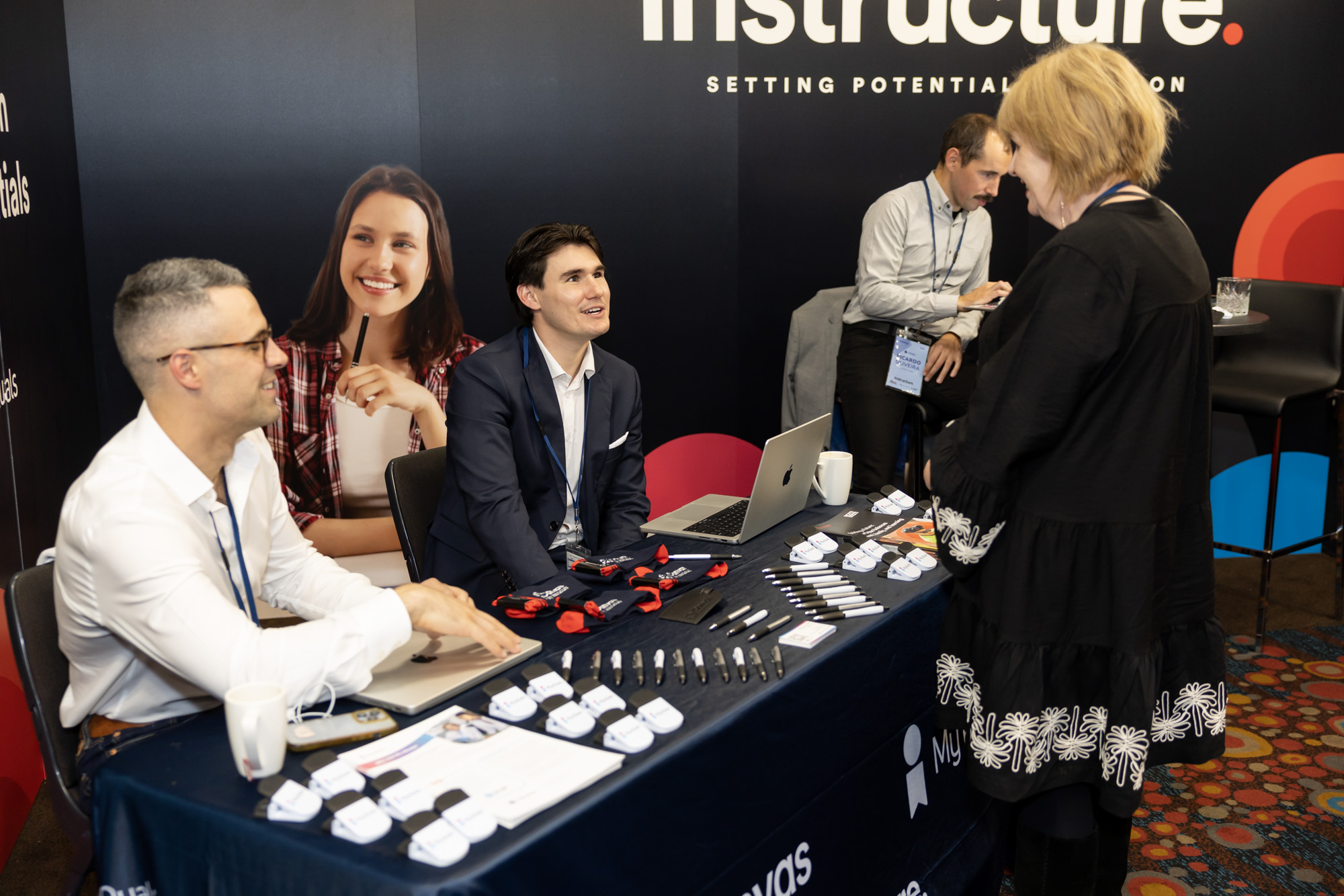
Visit Instructure to find out more about how they can support you.
The makers of Canvas LMS, Instructure is an education technology company that’s obsessed with student success. In New Zealand and Australia, Instructure is the technology provider powering My eQuals, the official tertiary digital credentials network for the region.
Gold Sponsor

PeoplePartners is a strategic workforce partner helping businesses build high-performing offshore teams that drive efficiency, profitability, and scalable growth across Australia, New Zealand, the US, and Canada. Through workforce re-engineering, PeoplePartners designs dedicated teams from the ground up—tailored to each client’s needs, culture, and industry. With no upfront fees, no lock-in contracts, and a 90-day replacement guarantee, clients retain full control as they scale.
Serving industries including professional services, training and education, finance, healthcare, IT, and entrepreneurial businesses, PeoplePartners embeds industry-aligned offshore talent directly into client teams. This approach helps reduce labor costs by up to 70% while improving productivity, engagement, and retention. Every solution is supported end-to-end, from recruitment and onboarding to IT, payroll, HR, and compliance, allowing leadership teams to focus on strategy, growth, and long-term performance.
Silver Sponsor
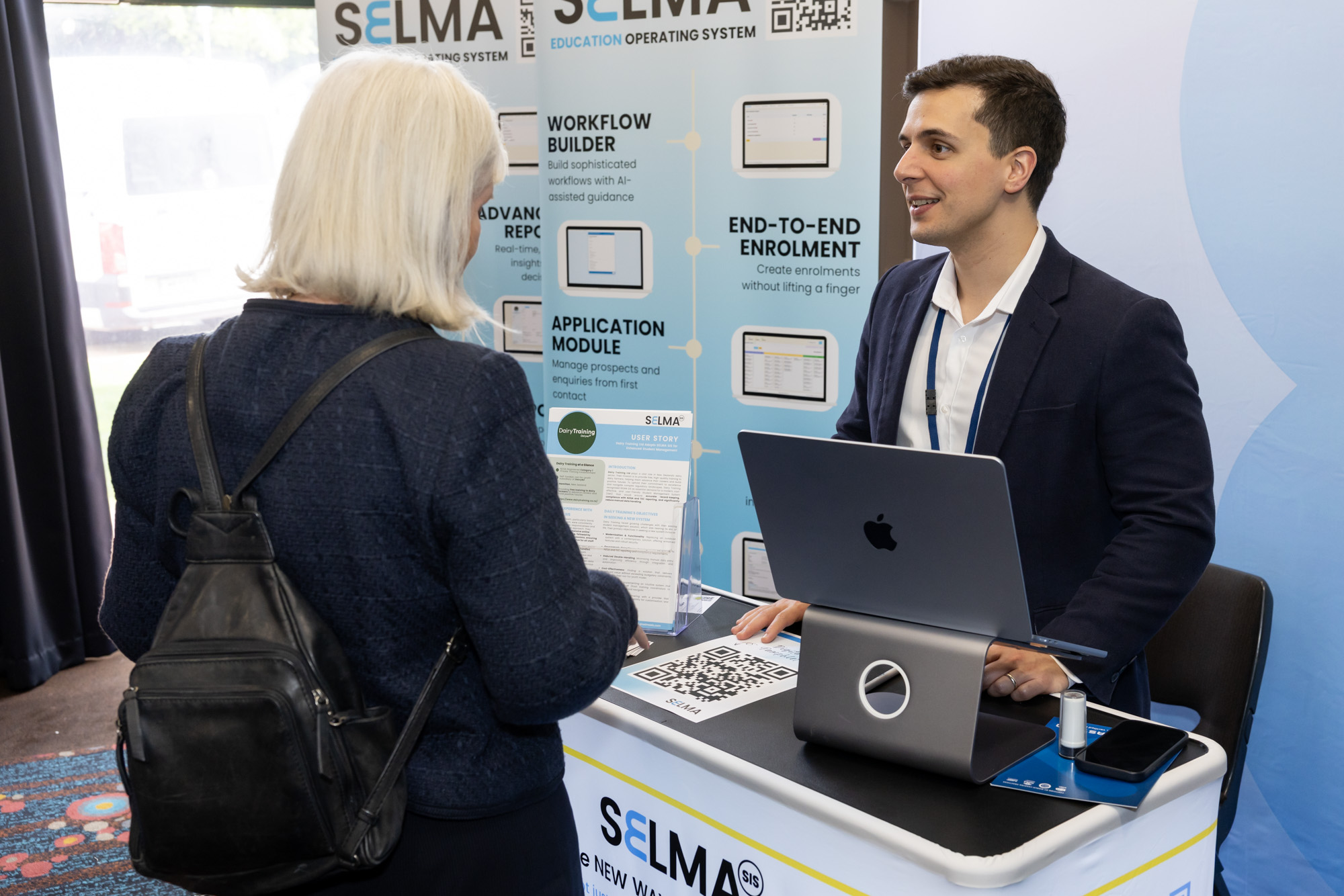
SELMA is New Zealand’s leading Student Management System, trusted by over 150 education providers and supporting a significant portion of the private training sector. Purpose-built for vocational, higher education, and work-based training, SELMA provides a single, integrated platform to manage the entire student lifecycle, from enquiry through to compliance reporting and growth.
Designed with compliance at its core, SELMA streamlines complex regulatory requirements, automates workflows, and integrates seamlessly with learning, finance, and communication tools. With features such as built-in CRM, real-time reporting, and two-way communication, providers can operate more efficiently while maintaining full visibility across their organisation.
Backed by dedicated local support and expanding into Australia, SELMA empowers education providers to scale confidently and focus on delivering high-quality education.
Silver Sponsor
At Supahuman AI, we build an AI-powered operating system to relieve the operational and compliance pressure faced by vocational and tertiary education providers across Aotearoa and Australia – freeing smart people from tedious work so they can focus on what actually matters: learner outcomes.
Our team brings deep expertise in AI and machine learning to design solutions purpose-built for the VET sector’s real challenges: generating NZQA-aligned assessments, streamlining compliance workflows, and helping education providers scale their impact without sacrificing quality or rigour.
We work in close partnership with Google, AWS, Microsoft, and OpenAI – drawing on the best global technologies to deliver AI that’s ethical, secure, and built for New Zealand’s regulatory and cultural context.
Coffee Cart Sponsor

OfficeMax is New Zealand’s leading education solutions provider, offering tens of thousands of products online at officemax.co.nz. From technology and BYOD solutions to classroom furniture, cleaning essentials, school supplies and learning tools, we help you create innovative, future-ready learning environments.
For more than 150 years, OfficeMax has been a trusted partner to New Zealand schools, tertiary institutions, workplaces and homes. We’re proud to support Barnardos What’s Up counselling service, and since 2011, our Max e-Grants programme has helped more than 17,000 Kiwi students access essential resources – helping level the playing field for learning.
Our dedicated Education team works alongside you to ensure you get the right products at the best value. By consolidating your supply needs with one trusted partner, we simplify procurement, reduce complexity, and unlock real savings – so your team can spend less time managing supplies and more time focused on what matters most: educating the next generation.
Exhibitors

Visit OrbitProtect to find out more about how they can support you.
OrbitProtect was established in Aotearoa New Zealand in 2005 to provide specialised insurance cover for inbound international visitors.
In 2022, our New Zealand business became part of the nib Group – a trusted international health insurer that provides health insurance to over 1.9 million Australian and New Zealand residents.
Our products are purpose built to meet visa insurance requirements with some visas requiring mandatory cover, while others such as Guardians of International Students and Accredited Employer Work Visa holders have optional insurance, giving you the flexibility to choose the cover that suits your needs.
Our purpose is simple, whether our members are visiting, studying or working in New Zealand, we want to ensure that they feel supported and cared for while far away from home.

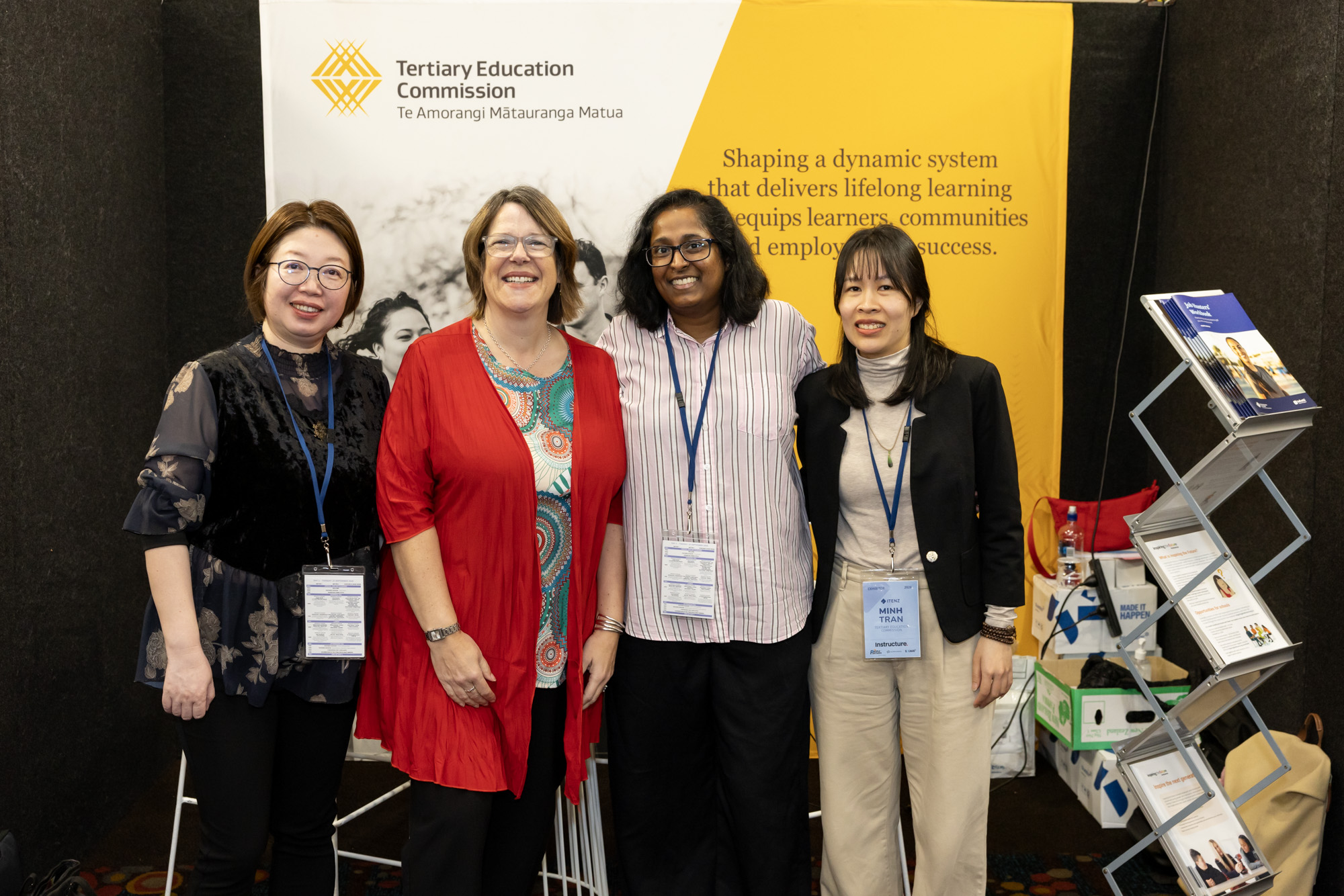
Visit the Tertiary Education Commission to find out more about how they can support you.
The Tertiary Education Commission (TEC) is a Crown agency that leads the government’s relationship with the tertiary education sector, invests government funding in tertiary education organisations (TEOs) and provides career information from education to employment.
We invest over $3 billion into tertiary education and supporting the tertiary and careers system. We ensure New Zealanders are equipped with the knowledge and skills they need for lifelong success. We fund over 700 TEOs to provide thousands of courses to hundreds of thousands of learners. We also monitor the performance of TEOs and provide information and advice to the government about tertiary education.

Visit the Education New Zealand Manapou ki te Ao to find out more about how they can support you.
Education New Zealand Manapou ki te Ao (ENZ) is the government agency dedicated to helping New Zealand realise the social, cultural, and economic benefits of international education. Our role is to promote New Zealand as a high-quality education destination offering excellent education and student experiences.
With approximately 85 staff in 13 locations around the world, ENZ works closely with New Zealand’s diverse education sector which includes schools, English language providers, Private Training Establishments, Institutes of Technology and Polytechnics (New Zealand Institute of Skills and Technology Te Pūkenga), and universities.

Visit the New Zealand Qualifications Authority (NZQA) to find out more about how they can support you.
The New Zealand Qualifications Authority (NZQA) ensures that New Zealand qualifications and credentials are credible and robust.
NZQA achieves this through:
- stewardship of the New Zealand Qualifications and Credentials Framework;
- management of the qualifications system;
- quality assurance of tertiary education organisations (except universities);
- quality assurance of assessment in schools and kura;
- delivery of robust senior secondary-school-level assessment; and
- work to support international qualifications recognition.
NZQA also supports providers to effectively implement the Education (Pastoral Care of Tertiary and International Learners) Code of Practice 2021 (the Code).

Visit instant.org.nz to find out more or contact us on 0800 864 863
Instant Education Solutions specialises in the development and provision of high-quality educational resources and services, allowing educators more time to focus on the needs of ākonga/learners. With over 25 years’ experience in resource development, Instant is proud to provide resources to New Zealand Private Training Establishments, tertiary providers, secondary schools, and international clients.
In 2026 Instant launched a new service, Instant Print, to deliver cost effective, premium quality digital printing for education providers and publishers across New Zealand, powered by the Fuji Revoria Press EC2100S and advanced finishing technology.

To learn more please visit: wisenet.co or call us on 0800 543 070
Wisenet exists to inspire education providers to shape a better world.
We are the leading student management system that supports training organisations in New Zealand on their journey to success. With over 1,000 customers worldwide, and as the market leader in New Zealand, we provide the technology and expertise that training organisations need to empower their learners from enrolment to graduation.

For more information.
Website: Pipi Learning: Bespoke Online Training & Education | NZ eLearning
Pipi Learning is an awesome New Zealand eLearning company that creates bespoke interactive online learning modules for vocational education and training providers, businesses and charities. We create engaging and culturally responsive content that meets the needs of diverse learners, ensuring accessibility for neurodiverse, low-literacy, and multilingual participants. Our services have recently expanded to include curated content licencing and our brand new online store!
We work alongside our partners to create amazing content to empower learners by delivering high-quality, flexible, and innovative learning solutions.

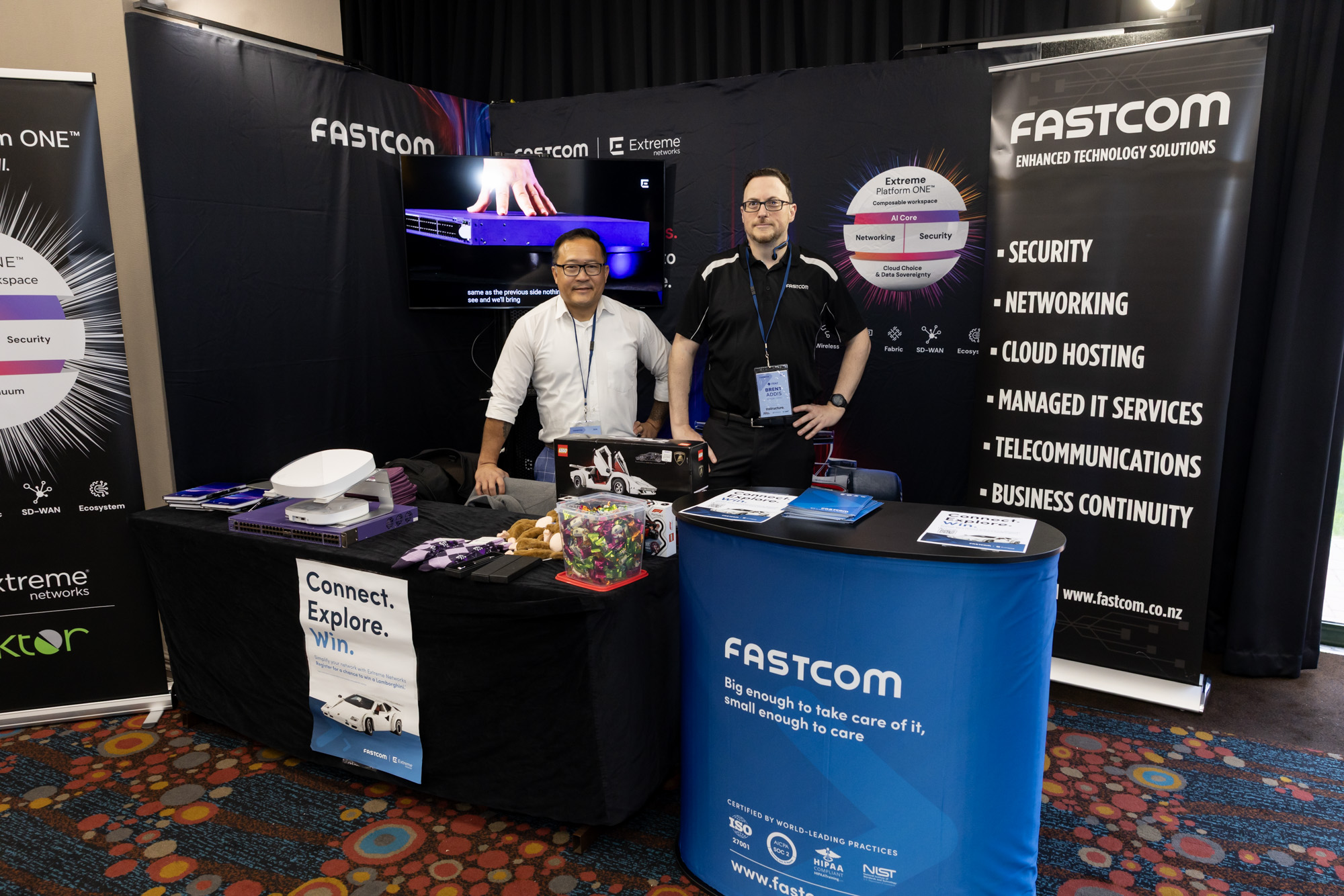
Since 2009, Fastcom has been delivering ICT services — including Cloud, Networking, Managed IT, Security, Business Continuity and Voice — to over 500 clients, among them some of New Zealand’s best-known household names.
We don’t do applications — we focus on being the engine room of your IT. With our own infrastructure and a custom-built network on leading Extreme Networks Fabric, there’s no finger-pointing: just one place, one phone call, and an attitude to get things done. With over 50 staff across four offices, we’re big enough to deliver but small enough to care — whether it’s a specific project or a fully managed solution.
Fastcom is built on trust and backed by internationally recognised certifications — ISO 27001:2022, SOC 2 and NIST — so you can be confident we’ll deliver. We’d love to chat at our stand about how we can help you achieve the outcomes that matter most to your organisation.
Fastcom — big enough to get it done, small enough to care.

For more information contact Chris Moore
e-mail: chris.moore@publictrust.co.nz
Website: Public Trust
Public Trust has a long tradition of looking after the interests of New Zealanders – it’s what we’ve been doing since we were established in 1873. We are one of New Zealand’s largest trustee organisations; and a Crown Entity – our independence is guaranteed under the Public Trust Act 2001.
Public Trust is best known as New Zealand’s largest provider of wills and estate administration services. Some may be surprised at our range of products and services including legal, financial, investment, Trusts, estate administration and estate protection. In fact, wherever you are at in your life, we have the experience and expertise to help you protect and manage your family interests and assets.
Our Fee Protect product is New Zealand’s most widely used student fee protection service. Designed in consultation with education providers, Ministry of Education and New Zealand Qualifications Authority (NZQA), we offer Standard, Static, and Bank Bond trust accounts. Our high quality service is personal, with dedicated client service managers and help-desk staff who are fully trained on Fee Protect and NZQA policy. We offer the only online standard trust solution that meets NZQA standards, which is accessible 24 hours a day, seven days a week.

Nexties is an AI platform that gives tertiary providers visibility they cannot get anywhere else: what learners are exploring six to twelve months before they ever make an enquiry. Most provider decisions are made on data that is already out of date, last year’s enrolments, last year’s completions. Nexties surfaces the signal earlier, so providers can see shifting learner interest by sector, region, and pathway while there is still time to act on it.
For PTEs, that means converting more of the enquiries you already generate, not chasing more volume. Nexties’ AI pre-qualifies fit before a learner ever reaches your team, cutting time spent on enquiries that were never going to enrol and giving you forward-looking evidence for programme planning, employer partnerships, and TEC investment plan alignment.
If you want to know what your next intake is already telling you before they contact you, find the Nexties team at the conference.
AWARDS
Independent Tertiary Education New Zealand Awards are held annually as part of the Conference.
ITENZ Awards
The aims of the annual Independent Tertiary Education New Zealand (ITENZ) Excellence Awards are
to recognise, encourage and celebrate excellence in tertiary education in independent tertiary
organisations. They provide opportunities for organisations to showcase what they do best, what
stands out in a crowd, to share good practice and for students and staff members to further their
careers.
Award winners will be published and a media statement released shortly after the event.
Panelists announce award winners, reading from citations that are prepared by the panel prior to
the presentations.
Winners receive a framed award certificate and a cash prize.
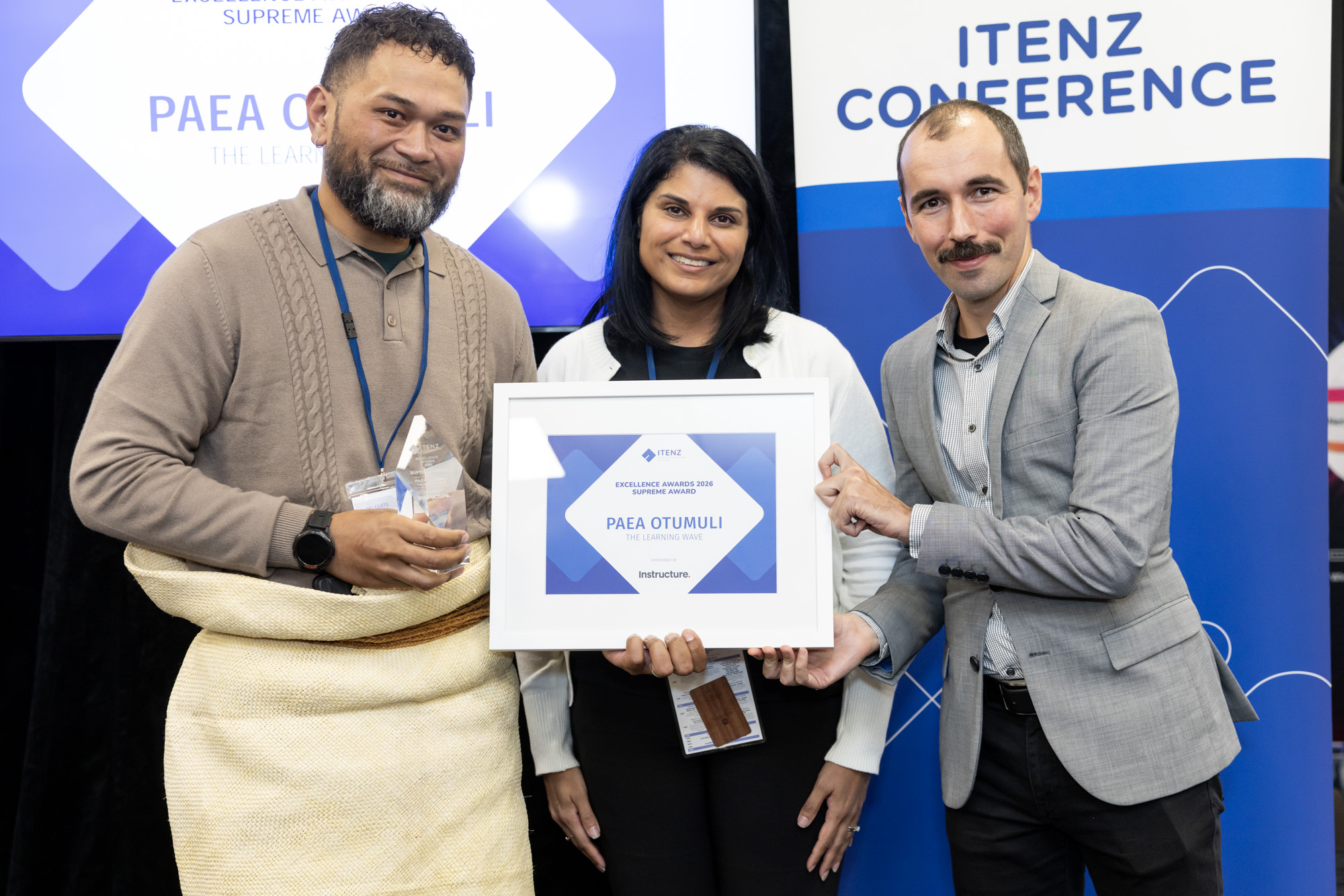
Supreme Award - presented by Instructure

Paea Otumuli
The Learning Wave
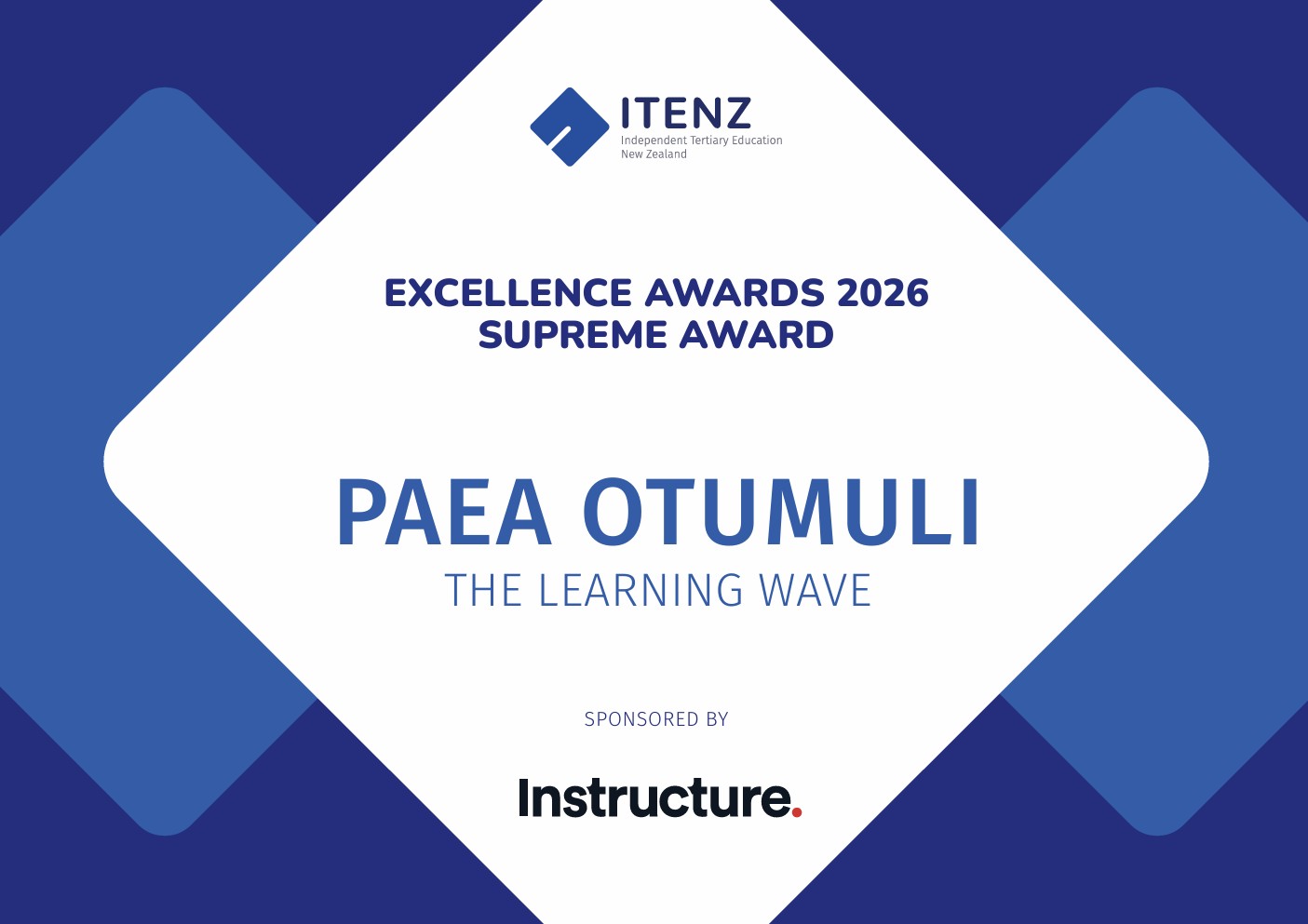
The Supreme Award recognises the single educator or staff member who has made the most outstanding contribution to advancing the best possible outcomes for learners across all award categories.
Paea Otumuli is deserving of the Supreme Award because his contribution is not only outstanding - it is exceptional in scale and depth. He advances learner outcomes at every level, creates culturally grounded literacy innovation, builds organisational capability, empowers priority communities, and leaves a legacy that extends far beyond the classroom.
Tutor of the Year Award - presented by Pipi Learning

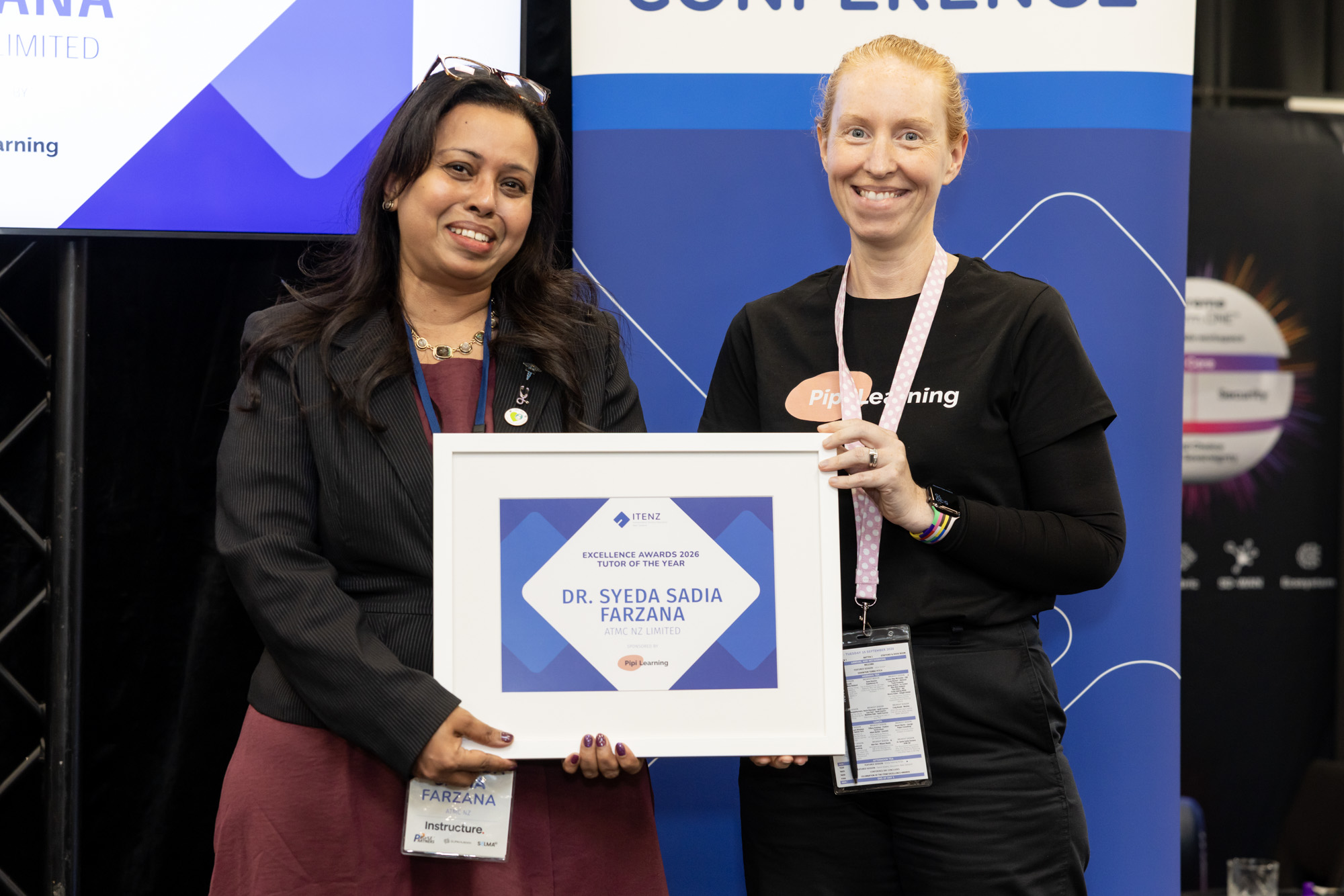
Dr Syeda Sadia Farzana
ATMC NZ limited
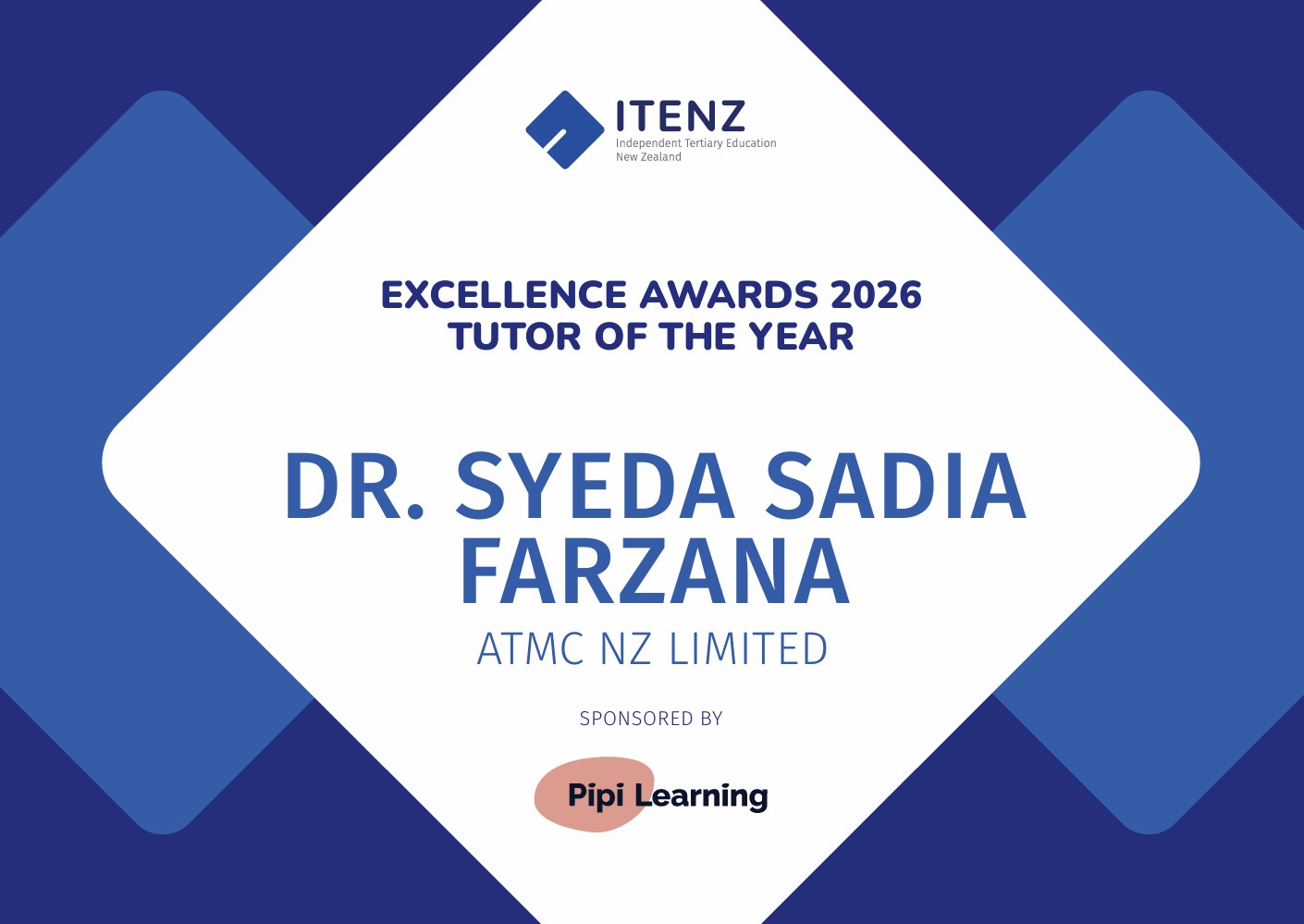
She has demonstrated outstanding capability in designing and leading assessment systems. NZQA‑aligned moderation leadership, organisation‑wide rubric development, are reflections of her contribution to academic integrity and learner success.
Her teaching practice is culturally responsive, integrating Te Tiriti o Waitangi, Te Whare Tapa Whā, NZ health policy, academic writing, and professional communication. Her teaching supports internationally trained healthcare professionals to confidently transition into the New Zealand health context, demonstrating both deep expertise and profound cultural responsiveness.
Dr Farzana contributes to the education and health sectors in mentoring colleagues completing NZCATT and US4098, presenting at national and international conferences, and contributing practitioner‑research that informs best practice.
Highly Commended - Julia Bruce-Mayne, Edvance Workplace Education
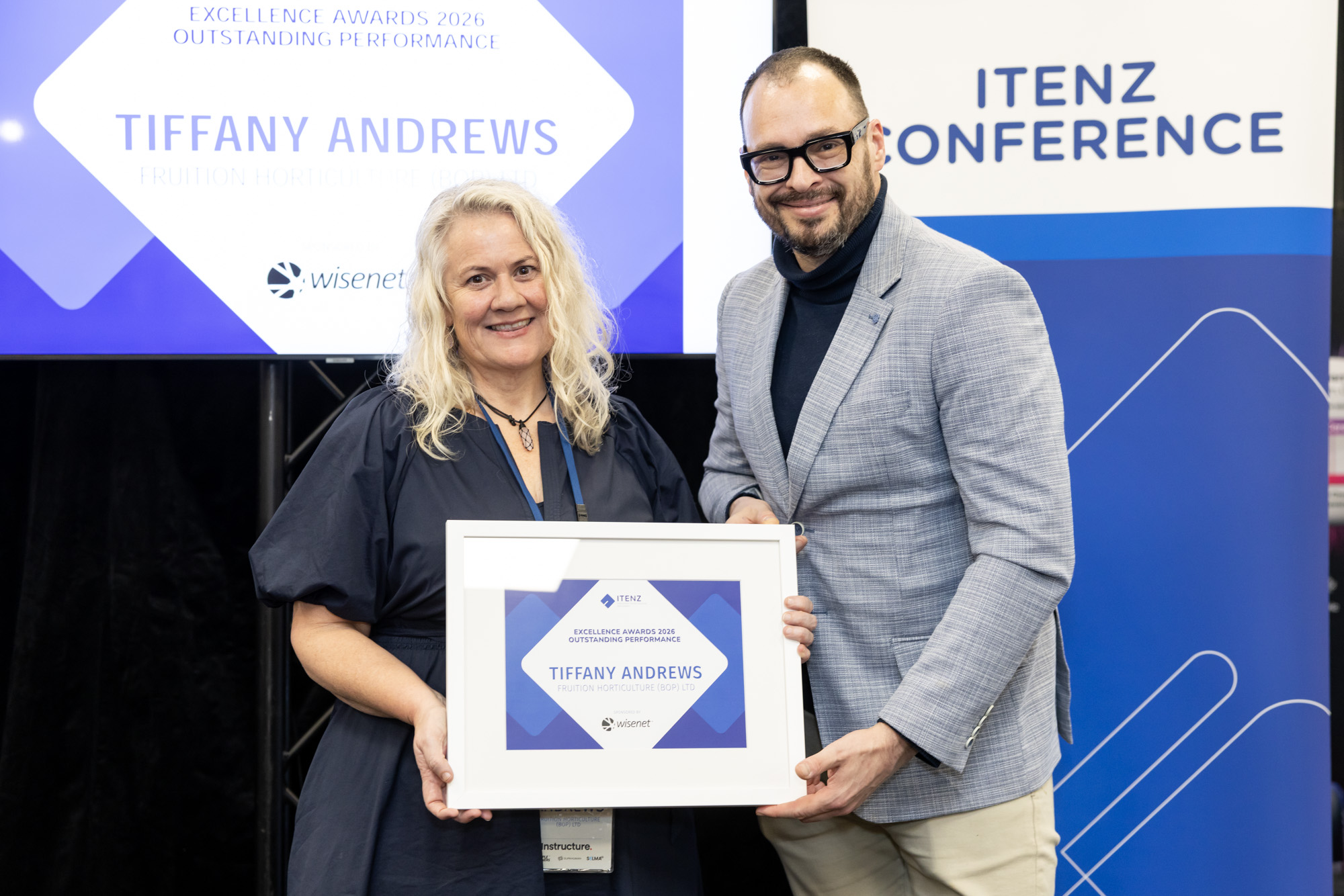
Outstanding Performance Award - presented by WisenetTiffany Andrews
Fruition Horticulture (BOP) Ltd
 Tiffany Andrews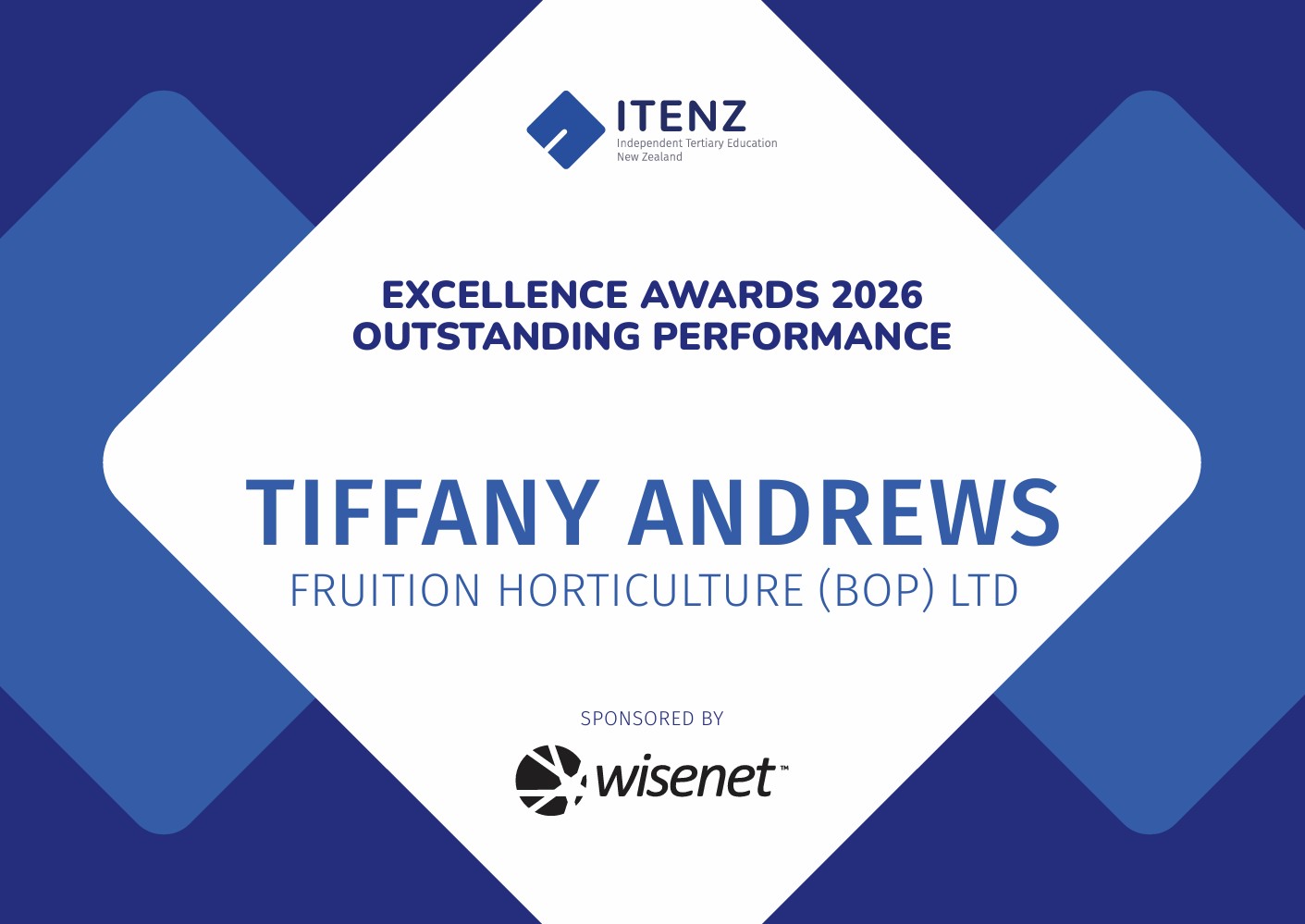
Tiffany’s portfolio provided a very wide range of evidence, including learner testimonials, colleague endorsements, academic artefacts, and sector contributions. She leads Code of Practice attestation and embeds wellbeing into daily culture. She redesigns assessments to remove barriers for diverse learners, introduces AI tools that increase accessibility and learner confidence. In addition, she takes a leadership role in equity focused research. Her work is strategic, and visible across the sector.
A regular ITENZ conference presenter, Tiffany also contributes to national research around wāhine Māori achievement. She is a transformational academic leader whose impact spans organisational quality, sector innovation, pastoral care systems, and industry aligned programme development.
Highly Commended - Hope Laurence, Edvance Workplace Education
Provider of the Year Award - presented by Public TrustLe Cordon Bleu
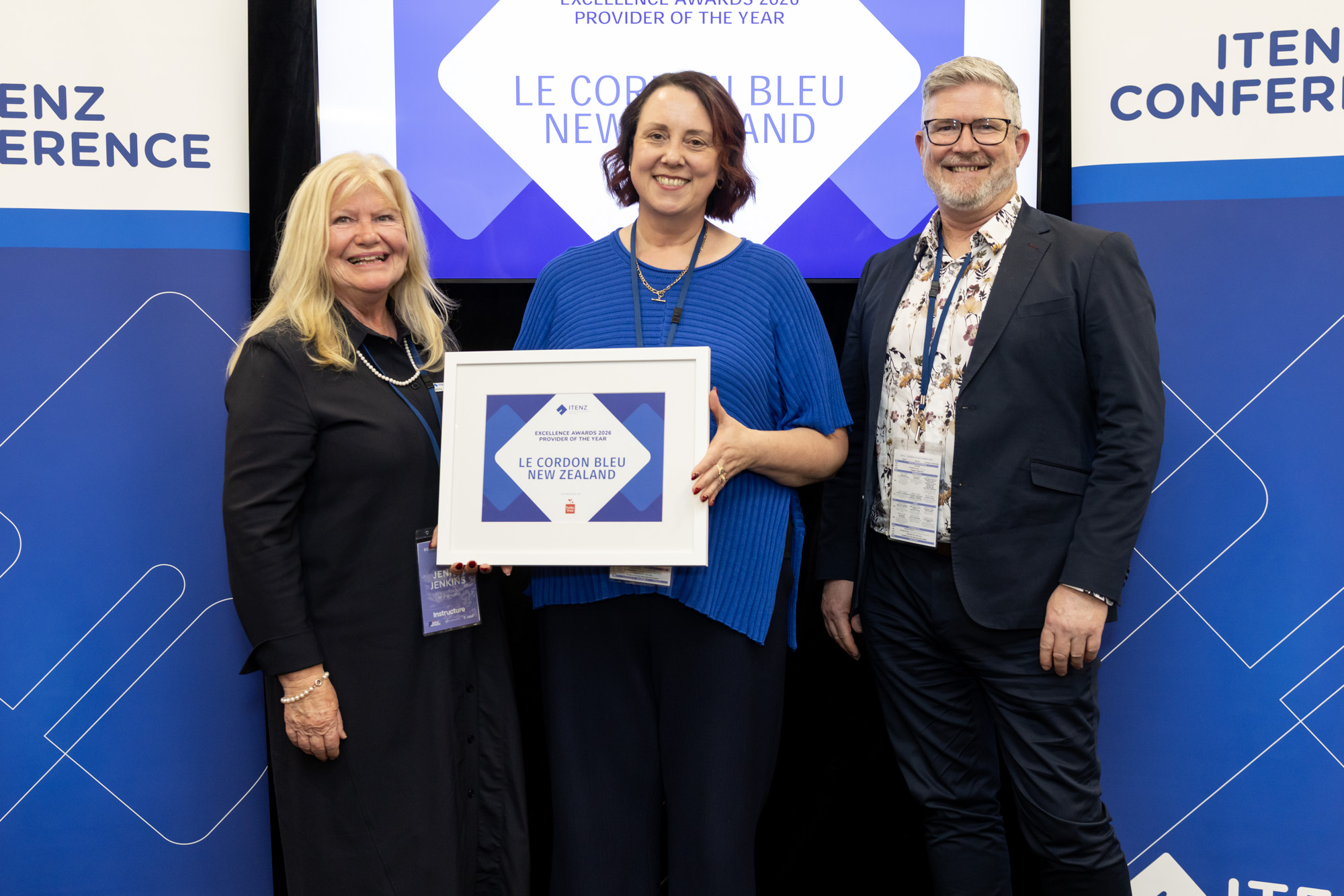
 Le Cordon Bleu
The portfolio submitted includes a strong student voice that has clearly evidenced responsive and inclusive teaching practice alongside outstanding pastoral care. Evidence from staff and industry organisations showed constant reflective practice occurring in all aspects of the organisation’s practice, leading to a strong cycle of continuous improvement.
The reach of this provider goes far beyond their organisation, to make a meaningful contribution to their industry by designing programmes and pathways that are responsive to industry needs and by collaborating with industry partners to support events and charity initiatives. These initiatives, alongside their own internal events contribute a great deal to the wider community. This excellent practice was recognised internationally when Le Cordon Bleu was named Oceania’s Top Culinary Training Institution at the 2025 World Culinary Awards.
Highly Commended - Dairy Training NZ
Highly Commended - Cavalli College
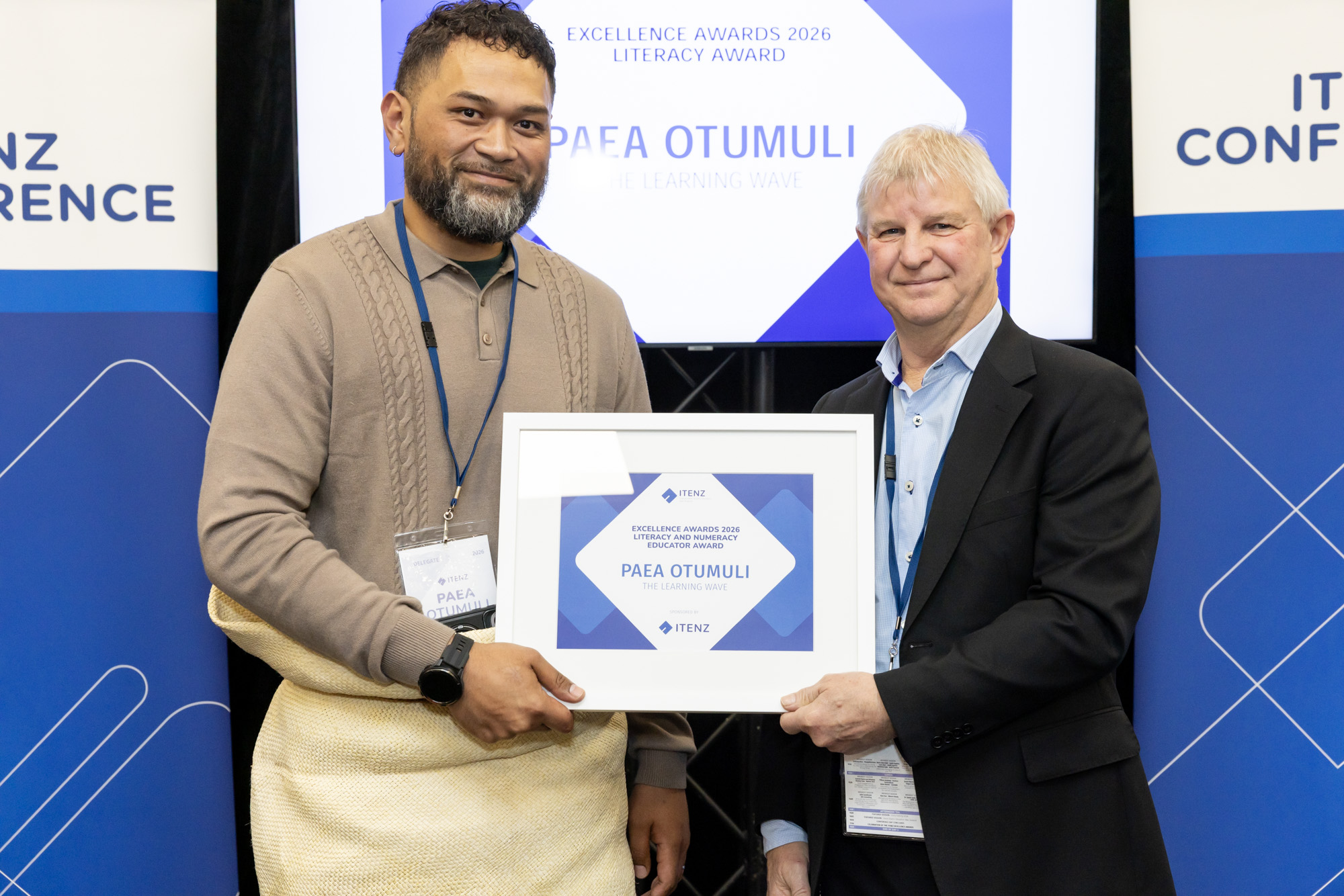
Literacy & Numeracy Educator Award - presented by ITENZ
Paea Otumuli
The Learning Wave
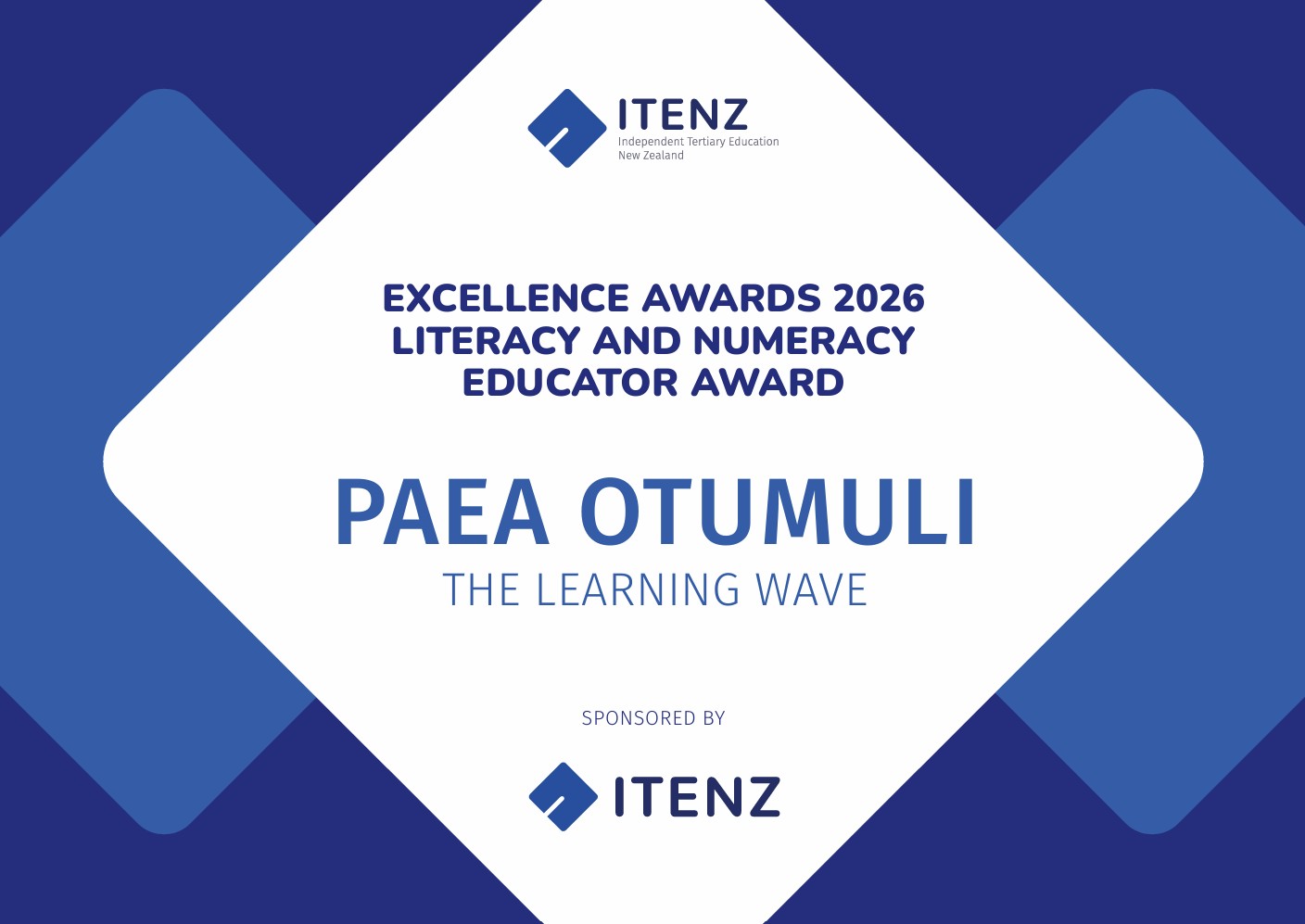
The evidence provided shows that Paea has supported learners by bridging the gap between traditional literacy models and real-life learner contexts. Despite learners’ stressful workplace commitments and competing priorities, he has developed learning environments that are safe, empathetic and culturally responsive.
Paea’s reach has extended beyond the facilitation of learning to benefit his entire organisation. His work to overlay Pasifika concepts of learning and leadership onto western models as part of an internal Pasifika project has helped make learning more inclusive and accessible for all learners.
Highly Commended - Helen Thorn, Edvance Workplace Education